
News
Dr Bawumia and Hon. Ken Ohene Agyapong: Who Is Converting Messages into Votes?


Dr. Bismark Odum-Sackey, a renowned lecturer and communications expert at the University of Education, Winneba, has analysed the political campaign communications of Dr Bawumia and Hon Ken Ohene Agyapong ahead of the NPP Presidential Primaries in his second research article.
The article, published on Graphic Online on Sunday, 25 January, examines who is effectively converting their messages into votes.
In my previous article, “Dr. Bawumia and Kennedy Agyapong in the Communication Battlefield,” I examined how the source factor is shaping the campaigns of Dr. Mahamudu Bawumia and Kennedy Ohene Agyapong.

Dr. Bismark Odum-Sackey PhD, Communication Expert/Lecturer – UEW
In this article, I shift attention to another critical element of the contest: messaging.
The Messaging
As indicated in my previous article, this analysis is based solely on selected videos of the two candidates. I relied exclusively on videos posted on the Facebook and TikTok pages of the candidates. Dr. Bawumia has verified Facebook and TikTok pages. Kennedy Agyapong, on the other hand, does not appear to have verified accounts on either platform; therefore, I relied on the pages with the highest following, which are widely portrayed as his official accounts.
I selected posts beginning 29 July 2025, when the NPP officially opened nominations for party members desirous of contesting to become the party’s presidential candidate. All videos posted on their respective Facebook and TikTok platforms within this period were watched and analysed.
In analysing a message, one may consider several approaches, including fear appeals, use of metaphors, message formats (e.g., statistics versus narrative), message balance (e.g., one-sided versus two-sided arguments), message framing (gain versus loss framing, relative versus absolute risk framing), message order (e.g., sequential request strategies), and the specificity of a message’s call to action (explicit versus implicit).
For this analysis, I examined the messages through four approaches:
peripheral, evidential, linguistic, and sociocultural. Across these approaches, I considered factors such as order of arguments, one-sided versus two-sided messaging, type of appeal, and explicit versus implicit conclusions.
Peripheral Approach
The peripheral approach focuses on packaging content in ways likely to appeal to the target audience. This includes the use of colours, fonts, pictures, images, and other visual elements that resonate with the audience.
In terms of packaging, Dr. Bawumia appears more deliberate. His pages are saturated with carefully selected campaign-tour videos and professionally curated images. Most of the videos take a documentary form and are well presented, featuring appealing voiceovers, commentaries, and interviews by Jefferson Sackey. The camera angles, sequencing, and overall flow speak volumes about the level of intentionality invested in the production.
Additionally, branding elements, such as backdrops, placards, and other campaign materials, reinforce this deliberateness. Content consistency is also evident, as most posts on Facebook are replicated on TikTok.
Kennedy Agyapong, on the other hand, does not have verified pages, but several accounts on both platforms are portrayed as his official pages. These pages are similarly saturated with pictures and videos of his campaign tours. Notably, his team also uses countdown-to-election artworks containing excerpts of his messages—an approach not observed on Dr. Bawumia’s pages.
Overall, when it comes to content packaging, Dr. Bawumia’s campaign appears more attractive and better branded than that of Kennedy Agyapong.
Evidential Approach
The evidential approach seeks to enhance the perceived relevance of issues by presenting evidence and facts to support claims. This is basically what you are telling your audience and the facts behind what you are saying.
From a communication standpoint, the messaging dynamics of the 2023 elections and the upcoming contest are different. In 2023, the NPP was in power, and the messaging focused on who could help maintain power. Following the party’s defeat in 2024, the question has shifted to who can help the party return to power.
As the immediate past flagbearer, Dr. Bawumia is expected to persuade his audience by explaining why he deserves another opportunity to lead the party. His messaging should therefore build hope, restore confidence, give assurance, and energise the base.
This requires a campaign that is not only visible and attractive but also substantively reassuring.
Kennedy Agyapong, having never contested as a presidential candidate, is expected to persuade the audience by explaining why change is necessary, why Dr. Bawumia should be replaced, and why he is the right alternative to return the party to power. This naturally requires critique, contrast, and the presentation of new and convincing ideas.
Based on these expectations, my analysis reveals notable lapses in Dr. Bawumia’s messaging. In many of his documentary-style videos, there is a heavy reliance on third-party endorsements, where supporters speak on his behalf and explain why they support him, under a slogan dubbed “Three (3) Reasons Why I Support Bawumia.” While third-party endorsements are valuable, in the current electoral context they are insufficient on their own.
Dr. Bawumia’s direct speaking time in these videos is often short and does not sufficiently address the critical questions confronting his candidature. His campaign theme, “Our Journey Together,” and his messages largely focus on unity, party history, gratitude to President Akufo-Addo, and the constituency-based budgeting system. These themes, though important, appear misaligned with what the current audience may be expecting from him.
For instance, in a video from the North East Savannah tour, Dr. Bawumia stated:
“There is a sense of pride and a sense of recognition that this is a man we want to vote for. It’s not because he is from the North. After all, if they wanted a regional leader, Dombo should have been leader, or Malik Alhassan in ’98, or Aliu Mahama in 2007. They did not support them; rather, they supported Kufuor and Akufo-Addo… They will assess you, and if they say you deserve the leadership, they will support you.”
Similarly, during a Greater Accra tour, he remarked: “Looking at the outcomes in Ablekuma Central, Odododiodoo, Ablekuma North, and many other places where opposing factions have come together to support my candidature, it has been heartwarming… Unity or lack of it was one of our problems in the last election, and one of the reasons we lost some seats in 2024.”
Kennedy Agyapong relies far less on third-party endorsements. In most of his videos, he is the main speaker, and each video usually contains at least one clear takeaway message that directly addresses audience expectations.
His messaging focuses on job creation, industrialisation, philanthropy, motivation, unity, firmness, resolve, and an uncompromising posture. For example, he stated:
“We are going to challenge ourselves as Ghanaians and make sure Ghana becomes successful. This is not a fashion show or a beauty contest; it is about brains and someone who loves his country.”
Addressing the Zongo community in Greater Accra, he said: “When you were struggling, you did not get a brother. Now that someone wants to succeed, he says you are his relative… Vote for someone who helped you when you were struggling.”
Dr. Bawumia’s messaging relies largely on rational appeals, encouraging reflection and reasoning. Kennedy Agyapong, however, relies more on emotional appeals, creating empathy, care, and a sense of belonging.
One striking observation from this study is that Dr. Bawumia rarely posts videos of his speeches or direct interactions with delegates. His pages are dominated by interviews about the campaign rather than the campaign itself. Although I have watched some videos of his speeches on Facebook and TikTok, these were not posted on his official pages. From a communication standpoint, this is puzzling.
Kennedy Agyapong’s pages, by contrast, are flooded with videos of his speeches and interactions with delegates. Social media platforms serve as extensions of a candidate’s voice and presence; therefore, they should be used to disseminate core messages, not merely to curate visual appeal.
Again, the evidential approach focuses on presenting proof or concrete examples to support one’s assertions. In this regard, Dr. Bawumia’s messaging exhibits notable gaps based on the videos analysed.
This approach is largely absent and insufficiently developed in his campaign communication. Kennedy Agyapong, on the other hand, often travels with products from his factories and other imported goods, which he uses as tangible evidence to support his arguments. Consequently, with respect to the evidential approach, Kennedy Agyapong is far ahead of Dr. Bawumia.
Linguistic and Sociocultural Approaches
The linguistic approach seeks to make messages more accessible by using the dominant or native language of the target audience. Language choice, intonation, clarity, and colloquial expressions significantly shape meaning.
In most of Dr. Bawumia’s videos, English is the dominant language. Kennedy Agyapong, however, predominantly uses Asante Twi. Subjected to the linguistic approach, the implications of this contrast are self-evident.
The sociocultural approach involves presenting messages in ways that align with the cultural values, beliefs, and lived experiences of the audience. Based on the excerpts analysed, Kennedy Agyapong demonstrates stronger sociocultural sensitivity.
Non-verbal communication also plays a critical role. Body language, movement, eye contact, and proximity affect meaning. Dr. Bawumia often speaks from behind a fixed microphone, centred against a backdrop—an approach aesthetically suitable for television. However, face-to-face communication requires movement, closeness, and physical engagement with the audience, which Kennedy Agyapong consistently demonstrates.
Another key aspect of messaging is the call to action. This is an implicit or explicit instruction that urges the audience to take action, for example, “Vote for me.” Both candidates employ calls to action in their campaigns.
In Bawumia’s case, he even has a themed campaign song that reinforces the call to action; however, Bawumia himself does not consistently reinforce it in his statements or speeches. Kennedy Agyapong, on the other hand, has been very consistent in emphasising the call to action personally, a factor that works to his advantage.
Conclusion
Overall, in terms of messaging, Dr. Bawumia appears ahead only in the peripheral approach. Kennedy Agyapong performs better across the evidential, linguistic, and sociocultural approaches.
If messaging is to play a decisive role, then based on the findings of this analysis so far, Kennedy Ohene Agyapong is currently outperforming Dr. Mahamudu Bawumia in the communication contest.
This series has become longer than I originally anticipated but the story is not yet over. In the final article, I will shift the focus to the audience factor, explore the output stages of communication, and draw broader analytical conclusions on who is truly winning the communication war. So, stay tuned. The decisive chapter is coming and it may just change everything we think we know about this contest.
Source: Graphic Online


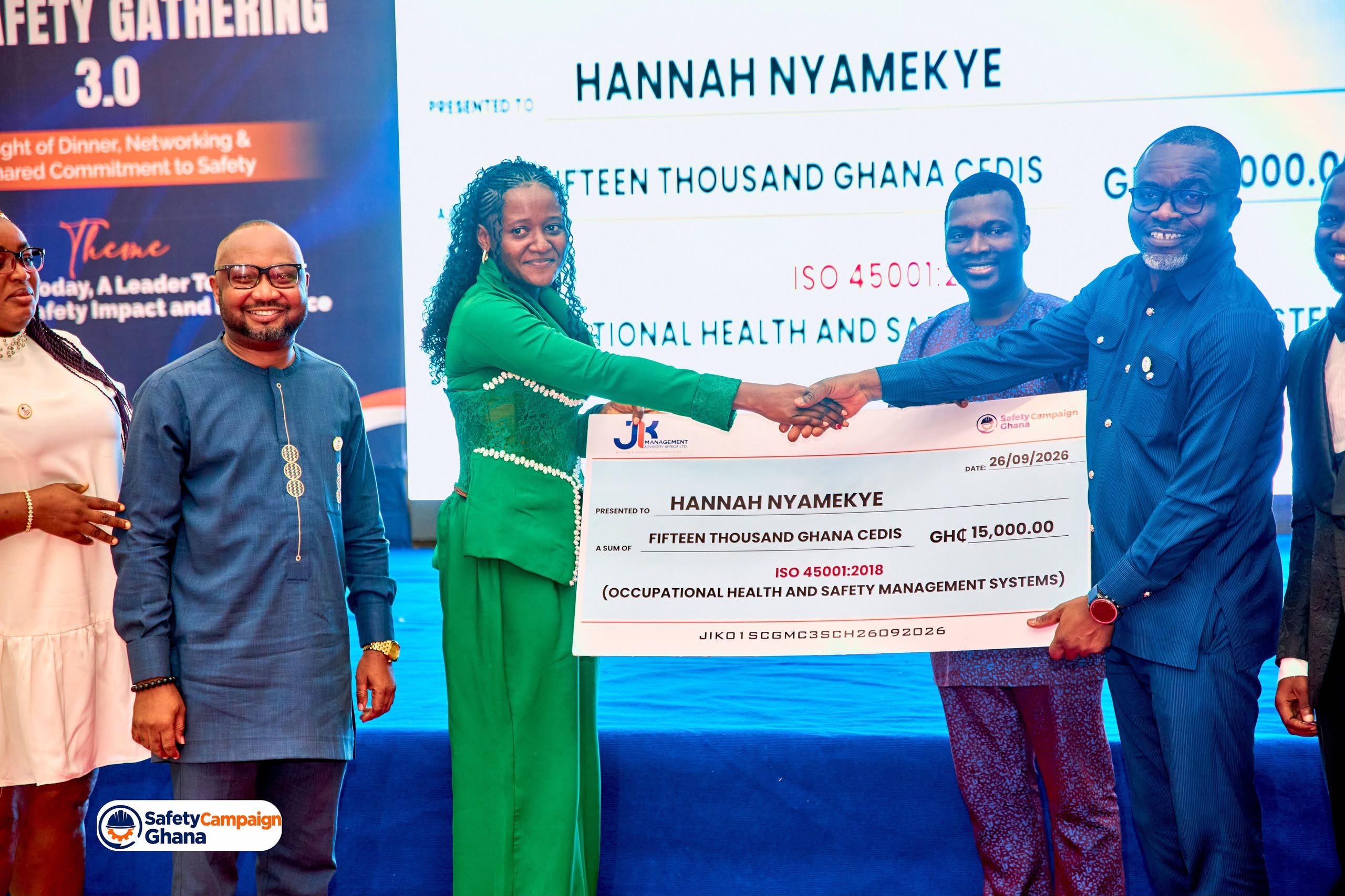
Safety Gathering 3.0 lived up to its billing as a premium evening celebrating safety leadership, excellence in mentorship, and the next generation of HSE professionals.
Held on Saturday, 26th September 2026 at 6:00 PM GMT at the Gold Fields Club House, Tarkwa, the event brought together senior industry leaders, policymakers, regulators, HSE professionals, academics, traditional leaders and students in one room for an evening of dinner, networking, recognition and meaningful conversations around a shared commitment to protecting lives and building safer workplaces.
True to its theme, Where Leaders Connect. Where Safety Inspires, the night delivered on its promise. It was more than an event – it was the room where leaders connect, collaborate and inspire.
The event was graced by distinguished dignitaries including Rev. George Azanu, MSc, MBA, General Manager of Engineers & Planners Company Ltd., Tarkwa Mine; Dennis Nii Odoi Sowah, Deputy Chief Inspector of Mines, Operations, Ghana; Ernestina Awelgiyah, QHSE Country Manager of SMT Ghana; Dr. Vida Badu Oppong, EAP Officer of Heath Goldfields Ltd.; Paul Ackah, Health, Safety and Environment Manager of Drill Masters Africa; Jonathan Ketu, Occupational Health and Safety Manager of Miro Forestry and Timber Products; Veronica Kwofie, MILT, Deputy Transport Manager of Consolidated Shipping Agencies Ltd.; Francis Amanle Cudjoe, CIH, Occupational/Industrial Hygienist of GoldFields Ghana; Edem Galley, Occupational Health and Safety Manager of Ghana Manganese Company; Ing. Lewis Sarpong, Occupational Health and Safety Superintendent, Projects, Africa Business Unit, AngloGold Ashanti; Irene Aboagye-Akari, Occupational Health and Safety Manager of Damang Gold Mine; Dr. Seth Nii Addy, CEO & Medical Director of Rabboni Christian Hospital Ltd.; and Damoah Emmanuel Nyarkoh, Founder & Director of Safety Campaign Ghana.
The cohort followed a structured mentorship period during which each mentee was assigned to an industry professional and taken through examinations, tasks, and activities designed to nurture them into future Health, Safety and Environment professionals.
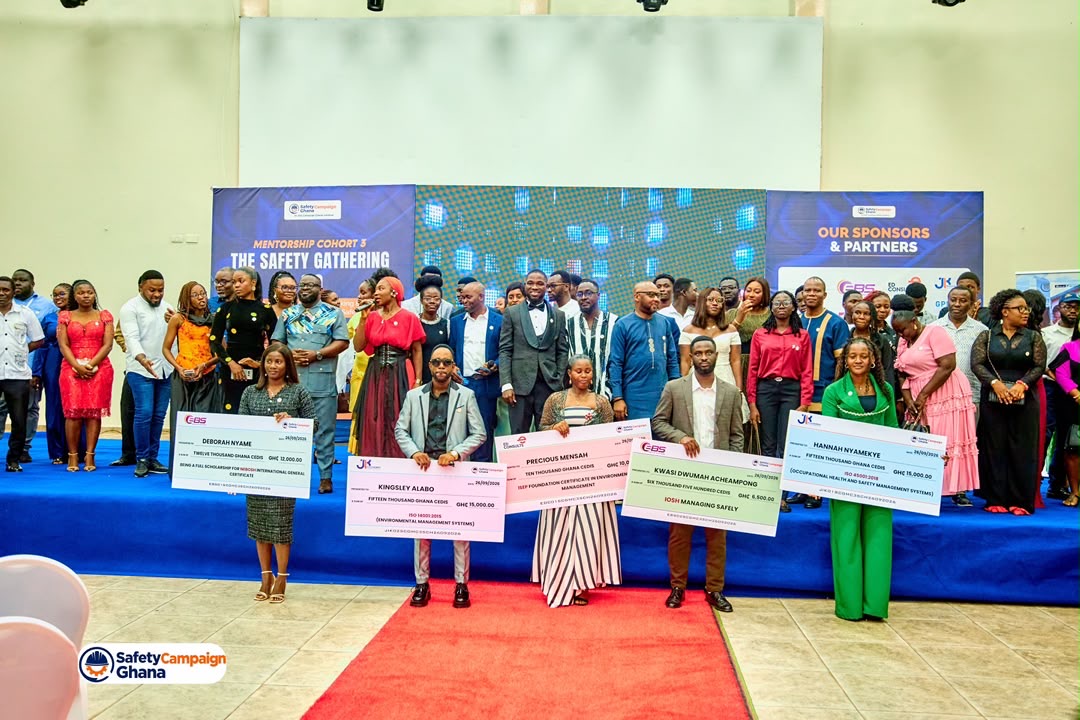
The climax of the evening was the award ceremony for the third mentorship cohort. Mentees were presented with certificates of participation and scholarships ranging from GHS 6,500 to GHS 15,000, with Hannah Nyamekye emerging as the overall winner.


“My Vision Is to Take Locally Manufactured Footwear to International Markets” – Simon Quayson, CEO of Mr. Simon Classic Footwear
Ghanaian locally manufactured footwear brand Mr. Simon Classic Footwear is positioning itself for expansion into the international market, with its...

Safety Gathering 3.0 Crowns New Champions at Goldfield Clubhouse, Tarkwa
Safety Gathering 3.0 lived up to its billing as a premium evening celebrating safety leadership, excellence in mentorship, and the...

REIGNING WITH CHRIST IN MY KINGDOM BY HER MAJESTY, DR. JOSEPHINE DIETE-SPIFF ESQ, JP, QUEEN OF TWON BRASS KINGDOM, BAYELSA STATE, NIGERIA.
(CONCLUSION) Advertisement HEALING AND DELIVERANCE MINISTRY God called me into the ministry through a dream in 1999, after I...


BOLIC and HOLYRINA Team Up on Inspirational New Song “Ɔbrɛ”
Life has a way of testing us. There are seasons when the road feels endless, the weight becomes heavy, and...
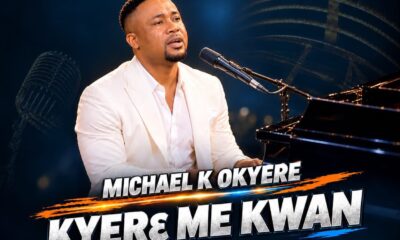

Michael K. Okyere releases “Kyere Me Kwan”
Ghanaian artiste Michael K. Okyere has released his latest single, Kyere Me Kwan, a faith driven song that reflects on...

Bono Legendary Awards 2026 Set to Celebrate Outstanding Icons and Contributors
The Bono Region is set to shine as distinguished personalities and accomplished individuals are brought together for the Bono Legendary...

Lhord Verses Showcases His Lyrical Prowess in New ‘LeBron Flow’ Freestyle
Ghanaian rapper Lhord Verses has released a new freestyle video titled “LeBron Flow Freestyle,” showcasing his lyrical ability, confidence and...

Ghana, Sierra Leone and Germany Set for Cultural Exchange Through GERGHANSAL 2027
Ghanaian, Sierra Leonean and German artists are set to come together for GERGHANSAL 2027, an international art exhibition aimed at...

Central Music Awards 2026: Full List of Nominees
Heritage Promotions, organizers of the annual Central Music Awards (CMA), have officially unveiled the nominees for the 15th edition of...


A DISTINGUISHED EXIT: Construction Division Celebrates Engr. Bello Kabir as He Retires from FCT Civil Service After 34 Years of Meritorious Service
A Seasoned Civil and Structural Engineer, Fountain of Knowledge, Mentor, Role Model and Distinguished Patriot Exits Active Service After More...
“My Vision Is to Take Locally Manufactured Footwear to International Markets” – Simon Quayson, CEO of Mr. Simon Classic Footwear
Safety Gathering 3.0 Crowns New Champions at Goldfield Clubhouse, Tarkwa
REIGNING WITH CHRIST IN MY KINGDOM BY HER MAJESTY, DR. JOSEPHINE DIETE-SPIFF ESQ, JP, QUEEN OF TWON BRASS KINGDOM, BAYELSA STATE, NIGERIA.
BOLIC and HOLYRINA Team Up on Inspirational New Song “Ɔbrɛ”
Michael K. Okyere releases “Kyere Me Kwan”

Emperor T-Jiga wins Best Diaspora Afrobeat Artist of the Year at Ghana Music Awards Europe 2026

Nora Mbadila, Audrine and Sharifa Emerge as Overall Best Students at Serasa Foundation Educational Awards

Serasa Foundation Celebrates 24 Students at 2nd Annual Educational Excellence Awards
Central Music Awards 2026: Full List of Nominees

MTN Ghana Engages Bloggers on Cybersecurity, AI and the Future of Digital Finance
-
 Showbiz3 weeks ago
Emperor T-Jiga wins Best Diaspora Afrobeat Artist of the Year at Ghana Music Awards Europe 2026
-
 Asikuma Odoben Brakwa District3 weeks ago
Nora Mbadila, Audrine and Sharifa Emerge as Overall Best Students at Serasa Foundation Educational Awards
-
 Asikuma Odoben Brakwa District3 weeks ago
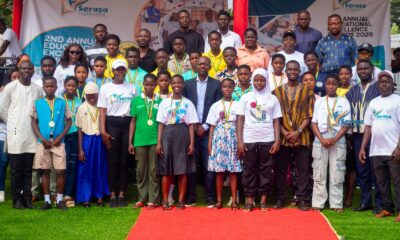
Serasa Foundation Celebrates 24 Students at 2nd Annual Educational Excellence Awards
-
Awards1 week ago
Central Music Awards 2026: Full List of Nominees
-
 Business3 weeks ago
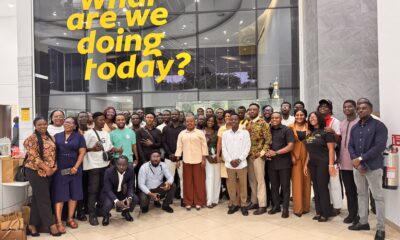
MTN Ghana Engages Bloggers on Cybersecurity, AI and the Future of Digital Finance
-
 Nigeria2 weeks ago
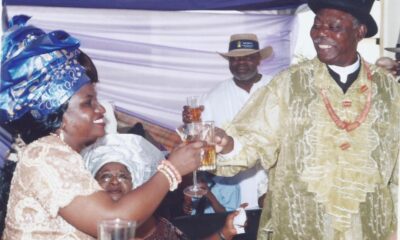
REIGNING WITH CHRIST IN MY KINGDOM BY HER MAJESTY, DR. JOSEPHINE DIETE-SPIFF ESQ, JP, QUEEN OF TWON BRASS KINGDOM, BAYELSA STATE, NIGERIA.
-
Nigeria1 week ago
A DISTINGUISHED EXIT: Construction Division Celebrates Engr. Bello Kabir as He Retires from FCT Civil Service After 34 Years of Meritorious Service
-

 Entertainment4 weeks ago
Michael K. Okyere to release new single “Kyere Me Kwan” on October 3