
Lifestyle
Renting vs Buying in 2025: What’s Best for You? – John Sam of John Sam Realty Explains


As the real estate market in Ghana continues to evolve, many individuals especially young professionals in urban centers like Accra and Kumasi are facing a familiar but crucial question: should I rent or buy?
John Sam, CEO of John Sam Realty, offers timely insights into the age old dilemma, especially in the context of Ghana’s growing real estate opportunities in 2025. With more flexible financing options, increased urban migration, and shifting lifestyle priorities, the decision is no longer as straightforward as it once was.

“Renting is flexible,” says John Sam in a social media post. “It requires less upfront investment, involves no long-term commitment, and allows for easier relocation. That’s why many young professionals, particularly in cities like Accra and Kumasi, prefer it while they focus on building their careers.”
Indeed, for career-driven individuals or those who value mobility, renting offers convenience. However, as Sam points out, “Rent increases are inevitable each year, and with every rent payment, you’re building someone else’s equity not your own.”
For those considering a more permanent base, buying presents a compelling alternative. Sam highlights the increasing accessibility of homeownership in Ghana: “Whether it’s a 2-bedroom home in East Legon Hills or a plot in Kasoa, buying is an investment in your future. With more banks and financial institutions offering mortgage options, monthly payments are becoming comparable to what many already pay in rent.”
He emphasizes that purchasing property comes with long-term advantages: equity growth, financial stability, and personal control over your living space. “You’re not just buying a roof over your head,” Sam says, “you’re securing a legacy for the next generation.”
His advice is practical: “If you’re planning to stay in one place for more than five years and can manage the down payment, seriously consider buying. It’s one of the smartest financial decisions you can make today.”






IGP DISU HONOURS PIONEER POLICEWOMEN, LAUNCHES BOOK ON WOMEN IN POLICING
The Inspector-General of Police, IGP Olatunji Rilwan Disu, psc(+), NPM, on Tuesday, 13th October 2026, attended the public presentation and...

ANGМU TE: NUNGUA’S HERITAGE, THE GADANGME IDENTITY AND A WORLD OF POSSIBILITIES
As Nungua prepares to celebrate the Dzenten Festival on 1st November 2026 the world has an opportunity to rediscover a...


Warrior King Watches CEO Honoured with Innovative Excellence Award at HAPAwards 10th Anniversary 2026
Ghanaian luxury watchmaker Mr Patrick Amofah recognised at the 10th anniversary of the Hollywood and African Prestigious Awards, held at...


Kwasi Bobo Unveils New Single “Odasani” as He Sets Sights on a Global Audience
Ghanaian recording artiste Kwasi Bobo is pushing his musical ambitions beyond Ghana with the release of his latest single, “Odasani,”...

Helping Hand Global Inc. transforms Peniel Nursery through renovation project in honour of late father and founding leaders
Helping Hand Global Incorporated has renovated classrooms, a kitchen, a playground and an ICT laboratory at the Presbyterian Church of...


“My Vision Is to Take Locally Manufactured Footwear to International Markets” – Simon Quayson, CEO of Mr. Simon Classic Footwear
Ghanaian locally manufactured footwear brand Mr. Simon Classic Footwear is positioning itself for expansion into the international market, with its...

Safety Gathering 3.0 Crowns New Champions at Goldfield Clubhouse, Tarkwa
Safety Gathering 3.0 lived up to its billing as a premium evening celebrating safety leadership, excellence in mentorship, and the...


REIGNING WITH CHRIST IN MY KINGDOM BY HER MAJESTY, DR. JOSEPHINE DIETE-SPIFF ESQ, JP, QUEEN OF TWON BRASS KINGDOM, BAYELSA STATE, NIGERIA.
(CONCLUSION) Advertisement HEALING AND DELIVERANCE MINISTRY God called me into the ministry through a dream in 1999, after I...
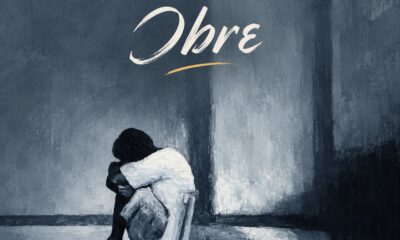

BOLIC and HOLYRINA Team Up on Inspirational New Song “Ɔbrɛ”
Life has a way of testing us. There are seasons when the road feels endless, the weight becomes heavy, and...


Michael K. Okyere releases “Kyere Me Kwan”
Ghanaian artiste Michael K. Okyere has released his latest single, Kyere Me Kwan, a faith driven song that reflects on...
IGP DISU HONOURS PIONEER POLICEWOMEN, LAUNCHES BOOK ON WOMEN IN POLICING
ANGМU TE: NUNGUA’S HERITAGE, THE GADANGME IDENTITY AND A WORLD OF POSSIBILITIES
Warrior King Watches CEO Honoured with Innovative Excellence Award at HAPAwards 10th Anniversary 2026
Kwasi Bobo Unveils New Single “Odasani” as He Sets Sights on a Global Audience
Helping Hand Global Inc. transforms Peniel Nursery through renovation project in honour of late father and founding leaders

Central Music Awards 2026: Full List of Nominees

REIGNING WITH CHRIST IN MY KINGDOM BY HER MAJESTY, DR. JOSEPHINE DIETE-SPIFF ESQ, JP, QUEEN OF TWON BRASS KINGDOM, BAYELSA STATE, NIGERIA.

A DISTINGUISHED EXIT: Construction Division Celebrates Engr. Bello Kabir as He Retires from FCT Civil Service After 34 Years of Meritorious Service
Kwasi Bobo Unveils New Single “Odasani” as He Sets Sights on a Global Audience

Lhord Verses Showcases His Lyrical Prowess in New ‘LeBron Flow’ Freestyle
-
 Awards3 weeks ago
Central Music Awards 2026: Full List of Nominees
-
 Nigeria4 weeks ago
REIGNING WITH CHRIST IN MY KINGDOM BY HER MAJESTY, DR. JOSEPHINE DIETE-SPIFF ESQ, JP, QUEEN OF TWON BRASS KINGDOM, BAYELSA STATE, NIGERIA.
-
 Nigeria3 weeks ago
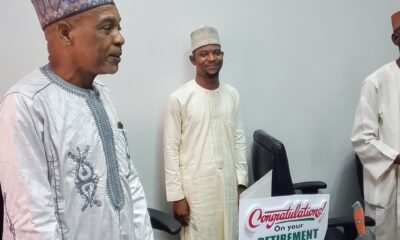
A DISTINGUISHED EXIT: Construction Division Celebrates Engr. Bello Kabir as He Retires from FCT Civil Service After 34 Years of Meritorious Service
-
Music2 weeks ago
Kwasi Bobo Unveils New Single “Odasani” as He Sets Sights on a Global Audience
-
 Music3 weeks ago
Lhord Verses Showcases His Lyrical Prowess in New ‘LeBron Flow’ Freestyle
-
Local News2 weeks ago
Safety Gathering 3.0 Crowns New Champions at Goldfield Clubhouse, Tarkwa
-
Nigeria3 weeks ago
REIGNING WITH CHRIST IN MY KINGDOM BY HER MAJESTY, DR. JOSEPHINE DIETE-SPIFF ESQ, JP, QUEEN OF TWON BRASS KINGDOM, BAYELSA STATE, NIGERIA.
-

 Events3 weeks ago
Ghana, Sierra Leone and Germany Set for Cultural Exchange Through GERGHANSAL 2027