
News
One Year On, Mahama’s Return Signals Progress – Portia Nana Akua Pinamang Observes














Nigeria
REIGNING WITH CHRIST IN MY KINGDOM BY HER MAJESTY, DR. JOSEPHINE DIETE-SPIFF ESQ, JP, QUEEN OF TWON BRASS KINGDOM, BAYELSA STATE, NIGERIA.


(CONCLUSION)
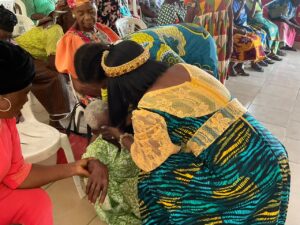
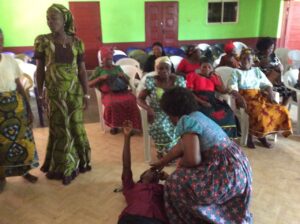
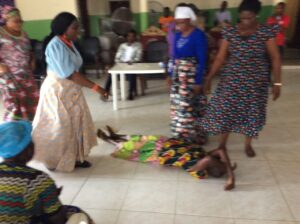
HEALING AND DELIVERANCE MINISTRY
God called me into the ministry through a dream in 1999, after I had my twin and last children. He gave me Mark 16:17-18 KJV, which I heard paraphrased this way: “These signs shall follow you because you believe; In my name, you shall cast out demons; you shall speak with new tongues; [18] You shall take up serpents; and if you drink any deadly thing, it shall not hurt you; you shall lay hands on the sick, and you shall recover”.
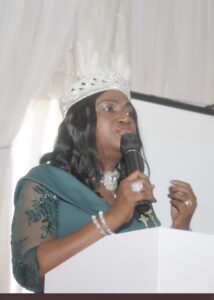
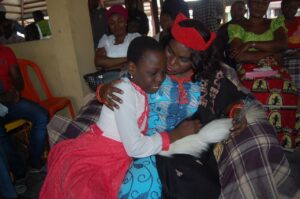
Her Majesty Ministering
Since then, the signs have not ceased to follow me. I have been poisoned but survived; attackers have tried to harm me but failed. I have laid hands on the sick, and they have been healed; even barren women have had babies. God has been faithful to his calling on my life. The enemy has threatened my life, marriage, and family. Twice, I almost lost my husband, but I laid my hands on him, and he recovered. My children and I have been in accidents, but God has delivered us without a scratch. My spirit cannot stop singing praises to God. He is an awesome God and, indeed, a miracle worker. Knowing the Lord and having a personal relationship with him is joyful. I am so blessed because it is a privilege.
CHARGE TO THOSE IN AUTHORITY
Proverbs 3:5-6 NLT: Trust in the LORD with all your heart; do not depend on your own understanding. Seek his will in all you do, and he will show you which path to take.
The essence of a Queen’s or leader’s existence is to obey God and enhance humanity.
• Every platform one is given in life has a purpose. The role of a queen or leader is to benefit others. So, touch lives by giving and championing the truth, even in difficulty, and God will show up for you. For the truth shall always set us free – John 8:32
• Be willing to learn and develop yourself
• Use your God-given opportunities, resources, and establishments to better your community, advance the people’s progress, and add value to lives with great respect.
• God’s assignment requires preparation, so gain the knowledge needed for the purpose you were created for; an enlightened leader will produce an enlightened community.
• Be committed to your words through actions; delay may occur, but never denial.
• Be a good listener, give both sides of a story equal opportunity, and encourage honesty.
• Do what is lawful, act with integrity, put God’s laws first, trust in God for positive outcomes, and be sincere in your relationships with people.
• Be strong, hard-working, courageous, and responsible in every action, standing up under pressure – Joshua 1:8
• Make obstacles your stepping stones to greatness; never be afraid to overcome them and never stop trying.
• Always remind yourself of the maxim that where there is no pain, there is no gain.
• Be ready to be addressed the way you dress.
As a leader, one must:
• Acknowledge God as your sole helper and trust him
• Reach out to the people in your constituency
• Promote peace, unity, and harmony within your respective constituency.
• Learn and practice mediation to foster peaceful coexistence.
• Equip yourself with the mental, moral, and social capacity to drive positive attitudinal changes among the people in your constituency.
• Make provisions for youth education, protection, development, and empowerment.
• Develop the ability to attract social and welfare packages for the underprivileged – Proverbs 19:17.
• Be productive and encourage productivity among the human folk by improving your knowledge of entrepreneurial skills, among others.
CONCLUSION
My success in leadership and life is entirely based on my salvation and God’s calling—his grace, opportunities, and openings. The challenges I faced taught me valuable lessons, and God’s grace was sufficient to give me victory because he is ever faithful. His words in Joshua 1:9 NLT say, “Be strong and courageous! Do not be afraid or discouraged. For the LORD your God is with you wherever you go.”

To reign successfully as an earthly queen or leader, one must not bow to any other God or power but Christ. One can be powerful and wealthy without being corrupt, as God is the author of power and wealth – Philippians 4:19, Deuteronomy 8:18. Trust in God, because he will never leave you if you don’t leave him, for his mercies are from everlasting to everlasting to those who fear him – Psalm 103:17.
To enjoy leadership and to thwart the enemy’s plans to rob you of eternity, you must trust in God by asking Jesus to come into your life and forgive you, because we have all come up short of his glory – Romans 3:23 NLT – “For everyone has sinned; we all fall short of God’s glorious standard.”
Afterward, build a deep relationship with God by spending time with him, reading and meditating on his word (the Bible), worshiping him, and living a life of thanksgiving. As he was with Joseph, so he is with me, Josephine; that’s how he will be with you all the days of your reign and life, and you will lack nothing. Shalom!
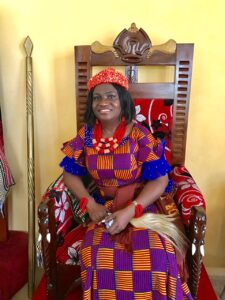
Her Majesty Queen Dr Josephine Diete-Spiff Esq,Twon Brass Kingdom

The Royal Couple,
King Alfred Diete-Spiff and Queen Dr Josephine Diete-Spiff
First Published by:
The Ambassadors Magazine
African Christian Fellowship,
Houston,Texas Chapter,United States.
@ 2024


REIGNING WITH CHRIST IN MY KINGDOM BY HER MAJESTY, DR. JOSEPHINE DIETE-SPIFF ESQ, JP, QUEEN OF TWON BRASS KINGDOM, BAYELSA STATE, NIGERIA.
(CONCLUSION) Advertisement HEALING AND DELIVERANCE MINISTRY God called me into the ministry through a dream in 1999, after I...


BOLIC and HOLYRINA Team Up on Inspirational New Song “Ɔbrɛ”
Life has a way of testing us. There are seasons when the road feels endless, the weight becomes heavy, and...


Michael K. Okyere releases “Kyere Me Kwan”
Ghanaian artiste Michael K. Okyere has released his latest single, Kyere Me Kwan, a faith driven song that reflects on...


Bono Legendary Awards 2026 Set to Celebrate Outstanding Icons and Contributors
The Bono Region is set to shine as distinguished personalities and accomplished individuals are brought together for the Bono Legendary...


Lhord Verses Showcases His Lyrical Prowess in New ‘LeBron Flow’ Freestyle
Ghanaian rapper Lhord Verses has released a new freestyle video titled “LeBron Flow Freestyle,” showcasing his lyrical ability, confidence and...


Ghana, Sierra Leone and Germany Set for Cultural Exchange Through GERGHANSAL 2027
Ghanaian, Sierra Leonean and German artists are set to come together for GERGHANSAL 2027, an international art exhibition aimed at...


Central Music Awards 2026: Full List of Nominees
Heritage Promotions, organizers of the annual Central Music Awards (CMA), have officially unveiled the nominees for the 15th edition of...


A DISTINGUISHED EXIT: Construction Division Celebrates Engr. Bello Kabir as He Retires from FCT Civil Service After 34 Years of Meritorious Service
A Seasoned Civil and Structural Engineer, Fountain of Knowledge, Mentor, Role Model and Distinguished Patriot Exits Active Service After More...


REIGNING WITH CHRIST IN MY KINGDOM BY HER MAJESTY, DR. JOSEPHINE DIETE-SPIFF ESQ, JP, QUEEN OF TWON BRASS KINGDOM, BAYELSA STATE, NIGERIA.
(SERIES THREE) Advertisement SOME OF MY NOTABLE HUMANITARIAN ENDEAVORS • Donation of Water boreholes, tanks, generators, and channels to...


OBA OLUGBENLE ATTENDS NIGERIA’S 66TH INDEPENDENCE ANNIVERSARY THANKSGIVING SERVICE
His Royal Majesty, Alayeluwa Oba (Dr.) Kehinde Gbadewole Olugbenle, the Olu Ilaro and Paramount Ruler of Yewaland, yesterday Sunday 28th...
REIGNING WITH CHRIST IN MY KINGDOM BY HER MAJESTY, DR. JOSEPHINE DIETE-SPIFF ESQ, JP, QUEEN OF TWON BRASS KINGDOM, BAYELSA STATE, NIGERIA.
BOLIC and HOLYRINA Team Up on Inspirational New Song “Ɔbrɛ”
Michael K. Okyere releases “Kyere Me Kwan”
Bono Legendary Awards 2026 Set to Celebrate Outstanding Icons and Contributors
Lhord Verses Showcases His Lyrical Prowess in New ‘LeBron Flow’ Freestyle

Emperor T-Jiga wins Best Diaspora Afrobeat Artist of the Year at Ghana Music Awards Europe 2026

Nora Mbadila, Audrine and Sharifa Emerge as Overall Best Students at Serasa Foundation Educational Awards

Serasa Foundation Celebrates 24 Students at 2nd Annual Educational Excellence Awards
Central Music Awards 2026: Full List of Nominees

MTN Ghana Engages Bloggers on Cybersecurity, AI and the Future of Digital Finance
-
 Showbiz3 weeks ago
Emperor T-Jiga wins Best Diaspora Afrobeat Artist of the Year at Ghana Music Awards Europe 2026
-
 Asikuma Odoben Brakwa District2 weeks ago
Nora Mbadila, Audrine and Sharifa Emerge as Overall Best Students at Serasa Foundation Educational Awards
-
 Asikuma Odoben Brakwa District2 weeks ago
Serasa Foundation Celebrates 24 Students at 2nd Annual Educational Excellence Awards
-
Awards3 days ago
Central Music Awards 2026: Full List of Nominees
-
 Business3 weeks ago
MTN Ghana Engages Bloggers on Cybersecurity, AI and the Future of Digital Finance
-
Nigeria4 days ago
A DISTINGUISHED EXIT: Construction Division Celebrates Engr. Bello Kabir as He Retires from FCT Civil Service After 34 Years of Meritorious Service
-

 Entertainment3 weeks ago
Michael K. Okyere to release new single “Kyere Me Kwan” on October 3
-
Nigeria7 days ago
REIGNING WITH CHRIST IN MY KINGDOM BY HER MAJESTY, DR. JOSEPHINE DIETE-SPIFF ESQ, JP, QUEEN OF TWON BRASS KINGDOM, BAYELSA STATE, NIGERIA.