
Local News
Actor Majid Michel talks about how he lost his voice on UTV’s United Showbiz


Ghana’s popular Actor, Majid Michel has disclosed for the first time on why he is having challenges with his voice.
Speaking on with Nana Ama McBrown on UTV’s United Showbiz, the actor Majid Michel noted that he lost his voice due to the fact of engaging in too much argument.
He said “I like argument. I am very argumentative, I love to argue alot. So it was in 2014 that I realised I had problem with my voice”.
In a conversation with Nana Ama McBrown On United Showbiz
https://twitter.com/wifiwrld/status/1312538320270893057?s=19


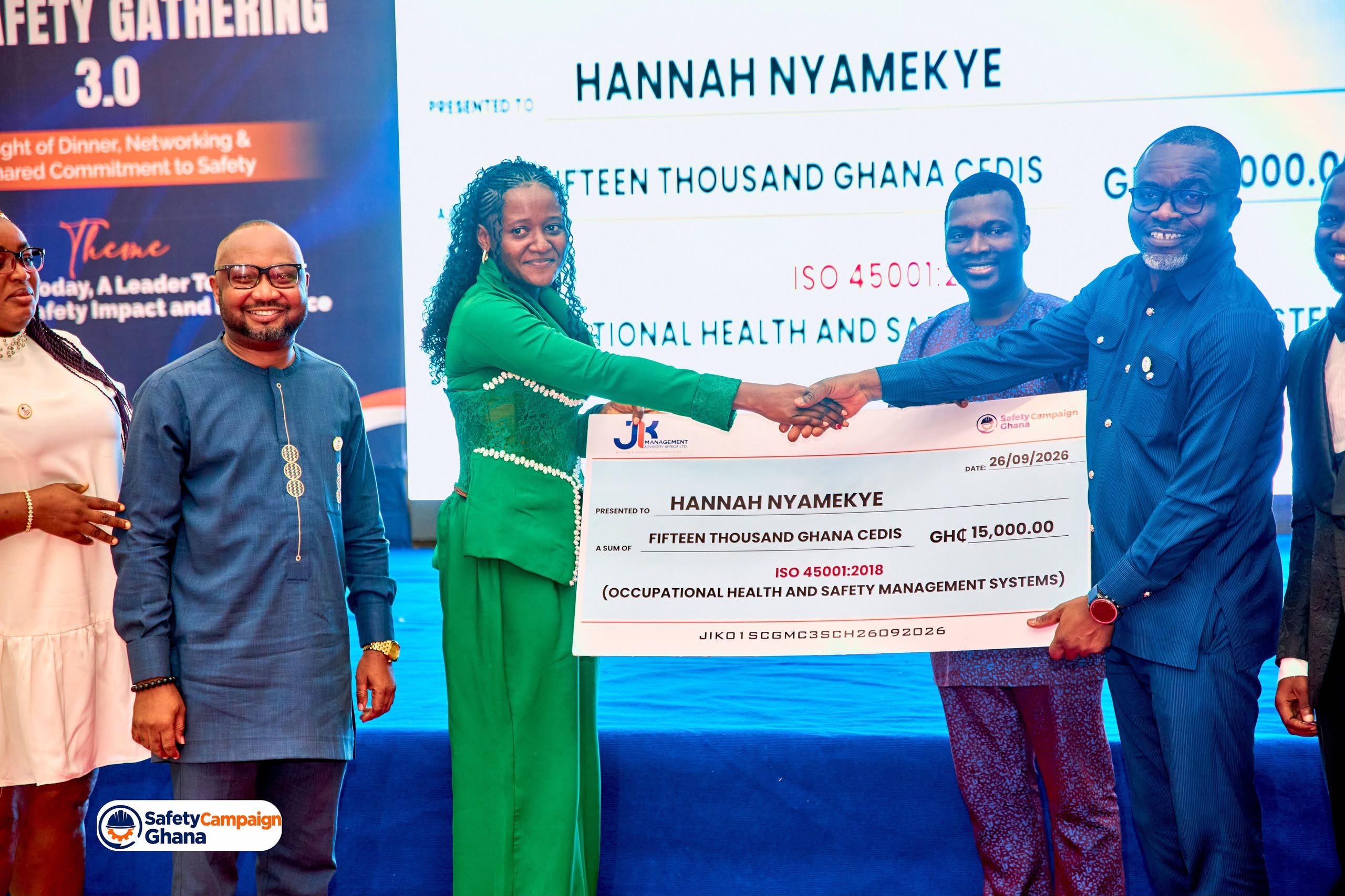
Safety Gathering 3.0 lived up to its billing as a premium evening celebrating safety leadership, excellence in mentorship, and the next generation of HSE professionals.
Held on Saturday, 26th September 2026 at 6:00 PM GMT at the Gold Fields Club House, Tarkwa, the event brought together senior industry leaders, policymakers, regulators, HSE professionals, academics, traditional leaders and students in one room for an evening of dinner, networking, recognition and meaningful conversations around a shared commitment to protecting lives and building safer workplaces.
True to its theme, Where Leaders Connect. Where Safety Inspires, the night delivered on its promise. It was more than an event – it was the room where leaders connect, collaborate and inspire.
The event was graced by distinguished dignitaries including Rev. George Azanu, MSc, MBA, General Manager of Engineers & Planners Company Ltd., Tarkwa Mine; Dennis Nii Odoi Sowah, Deputy Chief Inspector of Mines, Operations, Ghana; Ernestina Awelgiyah, QHSE Country Manager of SMT Ghana; Dr. Vida Badu Oppong, EAP Officer of Heath Goldfields Ltd.; Paul Ackah, Health, Safety and Environment Manager of Drill Masters Africa; Jonathan Ketu, Occupational Health and Safety Manager of Miro Forestry and Timber Products; Veronica Kwofie, MILT, Deputy Transport Manager of Consolidated Shipping Agencies Ltd.; Francis Amanle Cudjoe, CIH, Occupational/Industrial Hygienist of GoldFields Ghana; Edem Galley, Occupational Health and Safety Manager of Ghana Manganese Company; Ing. Lewis Sarpong, Occupational Health and Safety Superintendent, Projects, Africa Business Unit, AngloGold Ashanti; Irene Aboagye-Akari, Occupational Health and Safety Manager of Damang Gold Mine; Dr. Seth Nii Addy, CEO & Medical Director of Rabboni Christian Hospital Ltd.; and Damoah Emmanuel Nyarkoh, Founder & Director of Safety Campaign Ghana.
The cohort followed a structured mentorship period during which each mentee was assigned to an industry professional and taken through examinations, tasks, and activities designed to nurture them into future Health, Safety and Environment professionals.

The climax of the evening was the award ceremony for the third mentorship cohort. Mentees were presented with certificates of participation and scholarships ranging from GHS 6,500 to GHS 15,000, with Hannah Nyamekye emerging as the overall winner.


IGP DISU HONOURS PIONEER POLICEWOMEN, LAUNCHES BOOK ON WOMEN IN POLICING
The Inspector-General of Police, IGP Olatunji Rilwan Disu, psc(+), NPM, on Tuesday, 13th October 2026, attended the public presentation and...


ANGМU TE: NUNGUA’S HERITAGE, THE GADANGME IDENTITY AND A WORLD OF POSSIBILITIES
As Nungua prepares to celebrate the Dzenten Festival on 1st November 2026 the world has an opportunity to rediscover a...


Warrior King Watches CEO Honoured with Innovative Excellence Award at HAPAwards 10th Anniversary 2026
Ghanaian luxury watchmaker Mr Patrick Amofah recognised at the 10th anniversary of the Hollywood and African Prestigious Awards, held at...


Kwasi Bobo Unveils New Single “Odasani” as He Sets Sights on a Global Audience
Ghanaian recording artiste Kwasi Bobo is pushing his musical ambitions beyond Ghana with the release of his latest single, “Odasani,”...

Helping Hand Global Inc. transforms Peniel Nursery through renovation project in honour of late father and founding leaders
Helping Hand Global Incorporated has renovated classrooms, a kitchen, a playground and an ICT laboratory at the Presbyterian Church of...


“My Vision Is to Take Locally Manufactured Footwear to International Markets” – Simon Quayson, CEO of Mr. Simon Classic Footwear
Ghanaian locally manufactured footwear brand Mr. Simon Classic Footwear is positioning itself for expansion into the international market, with its...


Safety Gathering 3.0 Crowns New Champions at Goldfield Clubhouse, Tarkwa
Safety Gathering 3.0 lived up to its billing as a premium evening celebrating safety leadership, excellence in mentorship, and the...


REIGNING WITH CHRIST IN MY KINGDOM BY HER MAJESTY, DR. JOSEPHINE DIETE-SPIFF ESQ, JP, QUEEN OF TWON BRASS KINGDOM, BAYELSA STATE, NIGERIA.
(CONCLUSION) Advertisement HEALING AND DELIVERANCE MINISTRY God called me into the ministry through a dream in 1999, after I...


BOLIC and HOLYRINA Team Up on Inspirational New Song “Ɔbrɛ”
Life has a way of testing us. There are seasons when the road feels endless, the weight becomes heavy, and...


Michael K. Okyere releases “Kyere Me Kwan”
Ghanaian artiste Michael K. Okyere has released his latest single, Kyere Me Kwan, a faith driven song that reflects on...
IGP DISU HONOURS PIONEER POLICEWOMEN, LAUNCHES BOOK ON WOMEN IN POLICING
ANGМU TE: NUNGUA’S HERITAGE, THE GADANGME IDENTITY AND A WORLD OF POSSIBILITIES
Warrior King Watches CEO Honoured with Innovative Excellence Award at HAPAwards 10th Anniversary 2026
Kwasi Bobo Unveils New Single “Odasani” as He Sets Sights on a Global Audience
Helping Hand Global Inc. transforms Peniel Nursery through renovation project in honour of late father and founding leaders

Central Music Awards 2026: Full List of Nominees

REIGNING WITH CHRIST IN MY KINGDOM BY HER MAJESTY, DR. JOSEPHINE DIETE-SPIFF ESQ, JP, QUEEN OF TWON BRASS KINGDOM, BAYELSA STATE, NIGERIA.

A DISTINGUISHED EXIT: Construction Division Celebrates Engr. Bello Kabir as He Retires from FCT Civil Service After 34 Years of Meritorious Service

Lhord Verses Showcases His Lyrical Prowess in New ‘LeBron Flow’ Freestyle
Kwasi Bobo Unveils New Single “Odasani” as He Sets Sights on a Global Audience
-
 Awards3 weeks ago
Central Music Awards 2026: Full List of Nominees
-
 Nigeria3 weeks ago
REIGNING WITH CHRIST IN MY KINGDOM BY HER MAJESTY, DR. JOSEPHINE DIETE-SPIFF ESQ, JP, QUEEN OF TWON BRASS KINGDOM, BAYELSA STATE, NIGERIA.
-
 Nigeria3 weeks ago
A DISTINGUISHED EXIT: Construction Division Celebrates Engr. Bello Kabir as He Retires from FCT Civil Service After 34 Years of Meritorious Service
-
 Music3 weeks ago
Lhord Verses Showcases His Lyrical Prowess in New ‘LeBron Flow’ Freestyle
-
Music2 weeks ago
Kwasi Bobo Unveils New Single “Odasani” as He Sets Sights on a Global Audience
-
Local News2 weeks ago
Safety Gathering 3.0 Crowns New Champions at Goldfield Clubhouse, Tarkwa
-
Nigeria2 weeks ago
REIGNING WITH CHRIST IN MY KINGDOM BY HER MAJESTY, DR. JOSEPHINE DIETE-SPIFF ESQ, JP, QUEEN OF TWON BRASS KINGDOM, BAYELSA STATE, NIGERIA.
-

 Events3 weeks ago
Ghana, Sierra Leone and Germany Set for Cultural Exchange Through GERGHANSAL 2027