
Lifestyle
Alphavecta and the Future of Risk Management in Africa: Why Intelligent AI is No Longer Optional


Africa stands at a pivotal moment in its development journey. Rapid economic growth, expanding digital infrastructure, and shifting geopolitical dynamics are shaping new opportunities across the continent. But these opportunities are emerging alongside a complex and evolving landscape of risks ranging from political instability and climate-related disruptions to cyber threats and supply chain fragility. In such an environment, the traditional, reactive models of risk management are proving dangerously insufficient. This is where Alphavecta is stepping in not as a mere technology provider, but as a strategic force redefining what intelligent, context-aware risk mitigation should look like for Africa.
Alphavecta is pioneering a bold, proactive approach to risk management, purpose-built for Africa’s unique realities. At the heart of its platform is an intelligent AI system designed to detect, interpret, and respond to threats before they escalate. Unlike conventional risk tools that rely heavily on static data and backward-looking assessments, Alphavecta’s system integrates real-time data feeds, machine learning models, and local intelligence to deliver timely and actionable insights. It doesn’t just react, it anticipates.

One of Alphavecta’s core strengths lies in its deep contextual understanding of the African environment. Many global risk platforms are trained primarily on Western datasets and assumptions that simply don’t align with the African context. Alphavecta, however, has taken a different route developing and refining its models with local data, regional expertise, and ground-level insights. This results in a platform that is not only more accurate, but also far more relevant to the operational realities faced by African businesses, governments, and institutions.
Beyond its technological edge, Alphavecta offers a modular and scalable solution that can adapt to diverse industries and organizational sizes. Whether it’s an enterprise managing a multinational supply chain, a financial institution assessing credit and geopolitical exposure, or a startup navigating regulatory compliance, Alphavecta provides tailored risk solutions that evolve with the needs of the user. It is not a one-size-fits-all platform, it’s a strategic partner in decision-making.
Crucially, Alphavecta transforms risk management from a cost center into a competitive advantage. In an increasingly uncertain world, the ability to foresee and adapt to disruption is no longer optional; it is a cornerstone of resilience and growth. By offering predictive capabilities, early warning systems, and dynamic risk modeling, Alphavecta enables organizations to act decisively and confidently often before threats even fully materialize. This shift from passive defense to active foresight marks a profound transformation in how African institutions can approach risk.
The urgency for such intelligent solutions is growing. As digital adoption accelerates and cross-border investments increase, stakeholders will demand higher levels of risk transparency, accountability, and agility. Organizations that cling to outdated, manual processes will be left vulnerable not only to operational threats but also to reputational damage and missed opportunities.
Alphavecta is not just responding to this shift, it is leading it. By aligning cutting-edge AI with local intelligence and strategic foresight, the company is redefining the standards for risk management in Africa. Its vision is clear: a future where African enterprises are not just surviving in volatile conditions, but thriving because they are prepared, informed, and resilient.
In this new era, intelligent risk management is no longer a luxury or an afterthought. It is a foundational requirement and with Alphavecta at the forefront, Africa is poised to meet the future head-on.
Visit our website for more information: https://alphavecta.com/



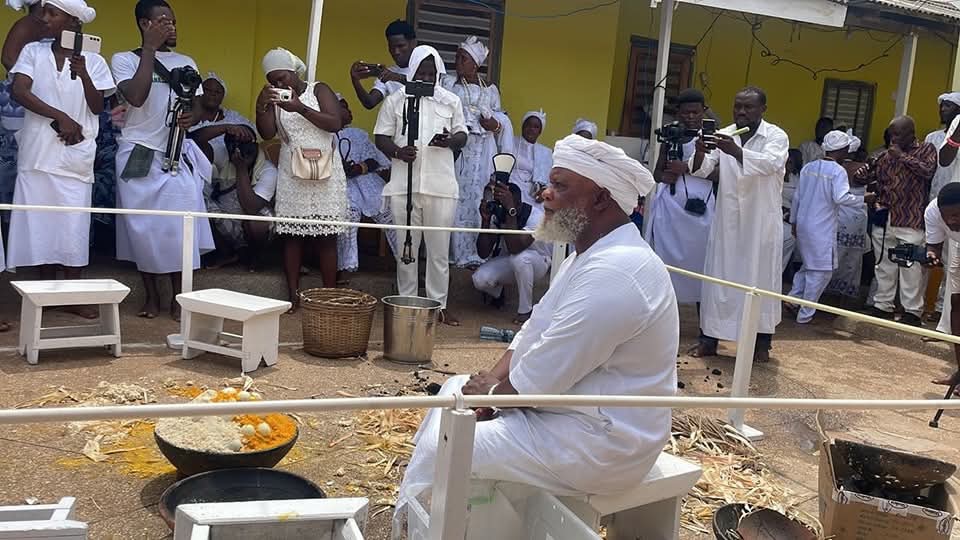


IGP DISU HONOURS PIONEER POLICEWOMEN, LAUNCHES BOOK ON WOMEN IN POLICING
The Inspector-General of Police, IGP Olatunji Rilwan Disu, psc(+), NPM, on Tuesday, 13th October 2026, attended the public presentation and...


ANGМU TE: NUNGUA’S HERITAGE, THE GADANGME IDENTITY AND A WORLD OF POSSIBILITIES
As Nungua prepares to celebrate the Dzenten Festival on 1st November 2026 the world has an opportunity to rediscover a...


Warrior King Watches CEO Honoured with Innovative Excellence Award at HAPAwards 10th Anniversary 2026
Ghanaian luxury watchmaker Mr Patrick Amofah recognised at the 10th anniversary of the Hollywood and African Prestigious Awards, held at...


Kwasi Bobo Unveils New Single “Odasani” as He Sets Sights on a Global Audience
Ghanaian recording artiste Kwasi Bobo is pushing his musical ambitions beyond Ghana with the release of his latest single, “Odasani,”...
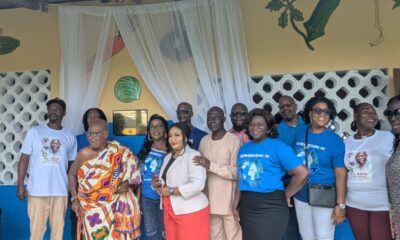

Helping Hand Global Inc. transforms Peniel Nursery through renovation project in honour of late father and founding leaders
Helping Hand Global Incorporated has renovated classrooms, a kitchen, a playground and an ICT laboratory at the Presbyterian Church of...


“My Vision Is to Take Locally Manufactured Footwear to International Markets” – Simon Quayson, CEO of Mr. Simon Classic Footwear
Ghanaian locally manufactured footwear brand Mr. Simon Classic Footwear is positioning itself for expansion into the international market, with its...


Safety Gathering 3.0 Crowns New Champions at Goldfield Clubhouse, Tarkwa
Safety Gathering 3.0 lived up to its billing as a premium evening celebrating safety leadership, excellence in mentorship, and the...


REIGNING WITH CHRIST IN MY KINGDOM BY HER MAJESTY, DR. JOSEPHINE DIETE-SPIFF ESQ, JP, QUEEN OF TWON BRASS KINGDOM, BAYELSA STATE, NIGERIA.
(CONCLUSION) Advertisement HEALING AND DELIVERANCE MINISTRY God called me into the ministry through a dream in 1999, after I...


BOLIC and HOLYRINA Team Up on Inspirational New Song “Ɔbrɛ”
Life has a way of testing us. There are seasons when the road feels endless, the weight becomes heavy, and...


Michael K. Okyere releases “Kyere Me Kwan”
Ghanaian artiste Michael K. Okyere has released his latest single, Kyere Me Kwan, a faith driven song that reflects on...
IGP DISU HONOURS PIONEER POLICEWOMEN, LAUNCHES BOOK ON WOMEN IN POLICING
ANGМU TE: NUNGUA’S HERITAGE, THE GADANGME IDENTITY AND A WORLD OF POSSIBILITIES
Warrior King Watches CEO Honoured with Innovative Excellence Award at HAPAwards 10th Anniversary 2026
Kwasi Bobo Unveils New Single “Odasani” as He Sets Sights on a Global Audience
Helping Hand Global Inc. transforms Peniel Nursery through renovation project in honour of late father and founding leaders

Emperor T-Jiga wins Best Diaspora Afrobeat Artist of the Year at Ghana Music Awards Europe 2026

Nora Mbadila, Audrine and Sharifa Emerge as Overall Best Students at Serasa Foundation Educational Awards

Central Music Awards 2026: Full List of Nominees

Serasa Foundation Celebrates 24 Students at 2nd Annual Educational Excellence Awards

MTN Ghana Engages Bloggers on Cybersecurity, AI and the Future of Digital Finance
-
 Showbiz4 weeks ago
Emperor T-Jiga wins Best Diaspora Afrobeat Artist of the Year at Ghana Music Awards Europe 2026
-
 Asikuma Odoben Brakwa District4 weeks ago
Nora Mbadila, Audrine and Sharifa Emerge as Overall Best Students at Serasa Foundation Educational Awards
-
 Awards2 weeks ago
Central Music Awards 2026: Full List of Nominees
-
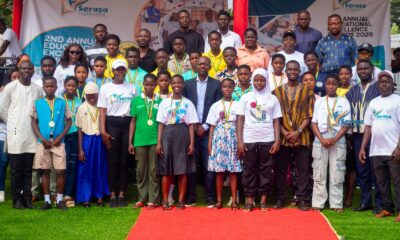 Asikuma Odoben Brakwa District4 weeks ago
Serasa Foundation Celebrates 24 Students at 2nd Annual Educational Excellence Awards
-
 Business4 weeks ago
MTN Ghana Engages Bloggers on Cybersecurity, AI and the Future of Digital Finance
-

 Nigeria2 weeks ago
REIGNING WITH CHRIST IN MY KINGDOM BY HER MAJESTY, DR. JOSEPHINE DIETE-SPIFF ESQ, JP, QUEEN OF TWON BRASS KINGDOM, BAYELSA STATE, NIGERIA.
-

 Nigeria2 weeks ago
A DISTINGUISHED EXIT: Construction Division Celebrates Engr. Bello Kabir as He Retires from FCT Civil Service After 34 Years of Meritorious Service
-

 Music2 weeks ago
Lhord Verses Showcases His Lyrical Prowess in New ‘LeBron Flow’ Freestyle