
Local News
How The Immune System Works — [Part 2]


HOW IMMUNE SYSTEM WORKS

Medically Reviewed By Aaron Nana Kofi Nkrumah – Health Educator /Researcher (Executive President, Coalition of Pharmacy Professionals, Ghana)
The innate immune system works to fight off pathogens before they can start an active infection. For some cases, the innate immune response is not enough, or the pathogen is able to exploit the innate immune response for a way into the host cells.
In such situations, the innate immune system works with the adaptive immune system to reduce the severity of infection, and to fight off any additional invaders while the adaptive immune system is busy destroying the initial infection.
Passive Immunity

Figure 1.0
Active immunity occurs when an individual is infected with a pathogen or if they are vaccinated. Exposure to the pathogen’s antigens by either of these will result in a primary immune response and immunologic memory. However, it is also possible in some circumstances to protect a susceptible person by giving them the antibodies produced by another person.
For example, if we were to take serum from people who had previously been infected with hepatitis A virus (HAV), it would contain significant concentrations of IgG against HAV.
It is possible to pool serum from previously infected individuals and then inject this immunoglobulin G into individuals who may have been recently been exposed to HAV in order to thwart the infection and prevent them from becoming a clinically active case.
In essence, passive immunization:gives antibodies made by others (e.g., pooled gamma globulin that will immediately recognize and neutralize an antigen to provide immediate protection. However, this passive form of protection bypasses the steps in primary exposure, and it does not produce immunologic memory. Moreover, the protection afforded by this passive form of immunity only lasts as long as the exogenous antibodies, about 3-4 months.
After the exogenous antibodies disappear, the individual is just as susceptible as a person who had never been exposed. IgG is able to cross the placenta from mother to fetus.
Active Immunity

Figure 1.1
Active immunity results when exposure to a disease organism triggers the immune system to produce antibodies to that disease.
Exposure to the disease organism can occur through infection with the actual disease (resulting in natural immunity), or introduction of a killed or weakened form of the disease organism through vaccination (vaccine-induced immunity).
Either way, if an immune person comes into contact with that disease in the future, their immune system will recognize it and immediately produce the antibodies needed to fight it. Active immunity is long-lasting, and sometimes life-long.
As a result, newborn infants receive some passive immunity from antigens to which their mother has been exposed.
However, this passive protection disappears over a period of 3-4 months, so it is important for the infant to develop active immunity through vaccinations (or by being infected and developing clinical disease).
The decline in passive immunity in an infant is what dictates the recommended schedule of immunizations for infants.
Passive Immunity
Passive immunity is provided when a person is given antibodies to a disease rather than producing them through his or her own immune system.
A newborn baby acquires passive immunity from its mother through the placenta.
A person can also get passive immunity through antibody-containing blood products such as immune globulin, which may be given when immediate protection from a specific disease is needed.
This is the major advantage to passive immunity; protection is immediate, whereas active immunity takes time (usually several weeks) to develop.
However, passive immunity lasts only for a few weeks or month. Only active immunity is long-lasting. Cells of the adaptive immune system
Unlike the innate immune system, the adaptive immune system relies on fewer types of cells to carry out its tasks: B cells and T cells.
Both B cells and T cells are lymphocytes that are derived from specific types of stem cells, called multipotent hematopoietic stem cells, in the bone marrow.
After they are made in the bone marrow, they need to mature and become activated.
Each type of cell follows different paths to their final, mature forms.
THE ADAPTIVE

The adaptive immune system, also referred as the acquired immune system, is a subsystem of the immune system that is composed of specialized, systemic cells and processes that eliminates pathogens by preventing their growth.
The acquired immune system is one of the two main immunity strategies found in vertebrates (the other being the innate immune system).
Acquired immunity creates immunological memory after an initial response to a specific pathogen, and leads to an enhanced response to subsequent encounters with that pathogen.
This process of acquired immunity is the basis of vaccination.
Like the innate system, the acquired system includes both humoral immunity components and cell-mediated immunity components.
Unlike the innate immune system, the acquired immune system is highly specific to a particular pathogen.
Acquired immunity can also provide long-lasting protection; for example, someone who recovers from measles is now protected against measles for their lifetime.
In other cases it does not provide lifetime protection; for example, chickenpox.
The acquired system response destroys invading pathogens and any toxic molecules they produce.
Sometimes the acquired system is unable to distinguish harmful from harmless foreign molecules; the effects of this may be hayfever, asthma or any other allergy.
Antigens are any substances that elicit the acquired immune response (whether adaptive or maladaptive to the organism).
The cells that carry out the acquired immune response are white blood cells known as lymphocytes.
Two main broad classes—antibody responses and cell mediated immune response—are also carried by two different lymphocytes (B cells and T cells).
In antibody responses, B cells are activated to secrete antibodies, which are proteins also known as immunoglobulins.
Antibodies travel through the bloodstream and bind to the foreign antigen causing it to inactivate, which does not allow the antigen to bind to the host.
In acquired immunity, pathogen-specific receptors are “acquired” during the lifetime of the organism (whereas in innate immunity pathogen-specific receptors are already encoded in the germline).
The acquired response is called “adaptive” because it prepares the body’s immune system for future challenges (though it can actually also be maladaptive when it results in autoimmunity).
The system is highly adaptable because of somatic hypermutation (a process of accelerated somatic mutations), and V(D)J recombination (an irreversible genetic recombination of antigen receptor gene segments).
This mechanism allows a small number of genes to generate a vast number of different antigen receptors, which are then uniquely expressed on each individual lymphocyte.
Since the gene rearrangement leads to an irreversible change in the DNA of each cell, all progeny (offspring) of that cell inherit genes that encode the same receptor specificity, including the memory B cells and memory T cells that are the keys to long-lived specific immunity.
A theoretical framework explaining the workings of the acquired immune system is provided by immune network theory.
This theory, which builds on established concepts of clonal selection, is being applied in the search for an HIV vaccine.
The term “adaptive” was first used by Robert Good in reference to antibody responses in frogs as a synonym for “acquired immune response” in 1964.
Good acknowledged he used the terms as synonyms but explained only that he “preferred” to use the term “adaptive”.
He might have been thinking of the then not implausible theory of antibody formation in which antibodies were plastic and could adapt themselves to the molecular shape of antigens, and/or to the concept of “adaptive enzymes” as described by Monod in bacteria, that is, enzymes whose expression could be induced by their substrates.
The phrase was used almost exclusively by Good and his students and a few other immunologists working with marginal organisms until the 1990s when it became widely used in tandem with the term “innate immunity” which became a popular subject after the discovery of the Toll receptor system in Drosophila, a previously marginal organism for the study of immunology.
The term “adaptive” as used in immunology is problematic as acquired immune responses can be both adaptive and maladaptive in the physiological sense.
Indeed, both acquired and innate immune responses can be both adaptive and maladaptive in the evolutionary sense.
Most textbooks today, following the early use by Janeway, use “adaptive” almost exclusively and noting in glossaries that the term is synonymous with “acquired”.
The classic sense of “acquired immunity” came to mean, since Tonegawas’s discovery, “antigen-specific immunity mediated by somatic gene rearrangements that create clone-defining antigen receptors”. In the last decade, the term “adaptive” has been increasingly applied to another class of immune response not so-far associated with somatic gene rearrangements.
These include expansion of natural killer (NK) cells with so-far unexplained specificity for antigens, expansion of NK cells expressing germ-line encoded receptors, and activation of other innate immune cells to an activated state that confers a short-term “immune memory”.
In this sense, “adaptive immunity” more closely resembles the concept of “activated state” or “heterostasis”, thus returning in sense to the physiological sense of “adaptation” to environmental changes.
HUMORAL VS. CELL MEDIATED IMMUNITY

Immunity refers to the ability of your immune system to defend against infection and disease.
There are two types of immunity that the adaptive immune system provides, and they are dependent on the functions of B and T cells, as described above.
Humoral immunity is immunity from serum antibodies produced by plasma cells.
More specifically, someone who has never been exposed to a specific disease can gain humoral immunity through administration of antibodies from someone who has been exposed, and survived the same disease.
“Humoral” refers to the bodily fluids where these free-floating serum antibodies bind to antigens and assist with elimination.
Cell-mediated immunity can be acquired through T cells from someone who is immune to the target disease or infection.
“Cell-mediated” refers to the fact that the response is carried out by cytotoxic cells.
Much like humoral immunity, someone who has not been exposed to a specific disease can gain cell-mediated immunity through the administration of T.
IMMUNOLOGICALLY MEMORY

Because the adaptive immune system can learn and remember specific pathogens, it can provide long-lasting defense and protection against recurrent infections.
When the adaptive immune system is exposed to a new threat, the specifics of the antigen are memorized so we are prevented from getting the disease again. The concept of immune memory is due to the body’s ability to make antibodies against different pathogens.
A good example of immunological memory is shown in vaccinations. A vaccination against a virus can be made using either active, but weakened or attenuated virus, or using specific parts of the virus that are not active.
Both attenuated whole virus and virus particles cannot actually cause an active infection. Instead, they mimic the presence of an active virus in order to cause an immune response, even though there are no real threats present.
By getting a vaccination, you are exposing your body to the antigen required to produce antibodies specific to that virus, and acquire a memory of the virus, without experiencing illness.
Some breakdowns in the immunological memory system can lead to autoimmune diseases. Molecular mimicry of a self‐antigen by an infectious pathogen, such as bacteria and viruses, may trigger autoimmune disease due to a cross-reactive immune response against the infection. One example of an organism that uses molecular mimicry to hide from immunological defenses is Streptococcus infection.
Dearly Beloved, This is A Masterpiece Written With You Mind and Your Loved Ones in Mind.
Please Help Others By Sharing on Every Platform and to all Your Contacts.
If You Need Any Assistance, Please Feel Free And Contact Me Through The Contacts Indicated below:
Written By: Aaron Nana Kofi Nkrumah -Health Educator /Researcher (Executive President, Coalition of Pharmacy Professionals, Ghana)
0541-718398 /0246-962358


Local News
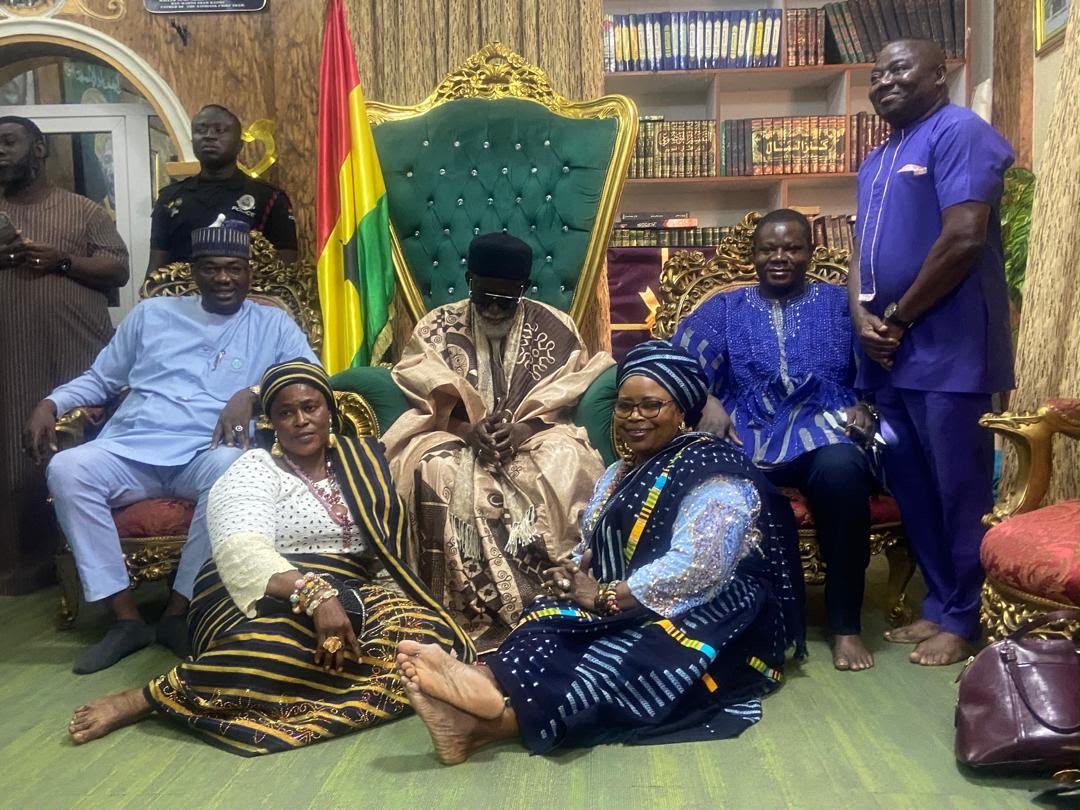
UN-PAF PAYS COURTESY CALL ON THE NATIONAL CHIEF IMAM TO DISCUSS PEACE AND YOUTH EMPOWERMENT



From Presidential Recognition in 2022 to Humanitarian Service in 2026: Mallam Musa Umar Yashi and the Unfinished Mission of Humanity
Contributed by Engr. Maidabino Public Affairs Commentator Four years after Nigeria recognised his humanitarian excellence, the mission continues through compassion,...


Ghanaian Culture Shines at Grand Unveiling of KALAJAH by African Dance Rhythms
African Dance Rhythms has introduced KALAJAH, a major traditional dance festival and cultural production, in a grand event held at...


#NewMusic: Naja Fairy “The Good Stuff” Prod.by JayScratch
Naja Fairy’s latest single, “The Good Stuff,” takes listeners on a nostalgic journey through love, heartbreak and healing. The song...


Gospel Musician Salome Nketia Announces Maiden Edition of ‘Dwell with Salome Nketia’
Seasoned gospel musician Salome Nketia has announced the maiden edition of her annual gospel event, “Dwell with Salome Nketia,” scheduled...


From Bawku to the Big Stage, Mic Yaaro Is Chasing His Music Dream
Abdul Majid, popularly known as Mic Yaaro, is an emerging rapper from Bawku in Ghana’s Upper East Region, steadily carving...


Who is Her Majesty, Dr. Josephine Diete-Spiff, Esq., JP, of the Twon Brass Kingdom
Her Royal Majesty, Queen Dr. Dame Evangelist Josephine Diete-Spiff, Esq., JP, the Queen of Twon Brass Kingdom in Bayelsa State,...


Mani Kay Graduates with an MSc in Communication and International Marketing from the University of Gold Coast
THE VOICE BEHIND THE MIC, THE MIND BEHIND THE MASTER’S: EMMANUEL KWEKU BUCKMAN’S JOURNEY TO AN MSc From radio broadcasting,...


UN-PAF PAYS COURTESY CALL ON THE NATIONAL CHIEF IMAM TO DISCUSS PEACE AND YOUTH EMPOWERMENT
A high-powered delegation from the United Nations Peace Ambassadors Foundation (UN-PAF) paid a courtesy call on His Eminence, the National...


Brother Ishmael Takes Home Male Vocalist of the Year Award at Ghana Music Awards USA
Ghanaian gospel musician based in the United States, Brother Ishmael, known in private life as Ishmael Mintah, has been crowned...


SourzeBoyy Releases New Single “Can’t Cool Down” featuring Kuami Lhord
Ghanaian rising act Sourze Boyy is back with a fresh new sound, teaming up with acclaimed Ghanaian artist Kuami Lhord...
From Presidential Recognition in 2022 to Humanitarian Service in 2026: Mallam Musa Umar Yashi and the Unfinished Mission of Humanity
Ghanaian Culture Shines at Grand Unveiling of KALAJAH by African Dance Rhythms
#NewMusic: Naja Fairy “The Good Stuff” Prod.by JayScratch
Gospel Musician Salome Nketia Announces Maiden Edition of ‘Dwell with Salome Nketia’
From Bawku to the Big Stage, Mic Yaaro Is Chasing His Music Dream

Ghana’s Most Powerful CEO Is Also Its Quietest, Operating In Silence
Mani Kay Graduates with an MSc in Communication and International Marketing from the University of Gold Coast

Meet the Face Behind Yonko TV: Nyameakoa Kwabena Mensah

Caleb Yeslord Plays Key Role in the Success of Ghana Comedy Awards 2026

Yonko TV Strengthens Its Position as a Leading Brand Promotion Platform in Ghana
-
 Business2 weeks ago
Ghana’s Most Powerful CEO Is Also Its Quietest, Operating In Silence
-
Central Region7 days ago
Mani Kay Graduates with an MSc in Communication and International Marketing from the University of Gold Coast
-
 Lifestyle3 weeks ago
Meet the Face Behind Yonko TV: Nyameakoa Kwabena Mensah
-
 Showbiz3 weeks ago
Caleb Yeslord Plays Key Role in the Success of Ghana Comedy Awards 2026
-
 Lifestyle3 weeks ago
Yonko TV Strengthens Its Position as a Leading Brand Promotion Platform in Ghana
-
Music2 weeks ago
SourzeBoyy Releases New Single “Can’t Cool Down” featuring Kuami Lhord
-
Showbiz2 weeks ago
Brother Ishmael Takes Home Male Vocalist of the Year Award at Ghana Music Awards USA
-

 Lifestyle4 weeks ago
Perfect Your Craft and Fame Will Find You, Ohemaa Woyeje Advises